

People have been starting blogs for years. Some become full-time businesses. Others stay on small hobby projects that earn a little on the side. But a blogging side hustle sits right in the middle of those two things. It is something you do seriously, with a real income goal, without quitting your day job first.
The appeal is obvious. A blog can earn money while you sleep. Once your content is published and ranked, it brings in traffic and income without you doing anything extra. That kind of setup is hard to find in the side hustle world, where most income options require you to actively show up for every dollar earned.
But let’s be honest. Blogging takes longer than most people expect. Most bloggers earn nothing in the first three months. Some earn nothing for a year. The ones who succeed are not necessarily the best writers. They are the ones who stayed consistent when the results were slow.
This article covers everything you need to know to start a blogging side hustle the right way, choose a topic that can actually earn, grow an audience without burning out, and turn that audience into real income.
Table of Contents
What Is a Blogging Side Hustle?
A blogging side hustle means running a website with written content around a specific topic, with the goal of earning money from that content over time. You write posts, publish them, people find them through Google or social media, and income comes from ads, affiliate links, sponsored posts, or products you sell.
The key word is “specific topic.” A blog that writes about everything tends to rank for nothing. A blog that covers one focused subject, personal finance, home organization, travel with toddlers, vegetable gardening, tends to attract a loyal audience and rank consistently in search results.
That is the lesson the Side Hustle Nation founder learned the hard way. He blogged about everything for years. When he narrowed his focus to side businesses in 2013, his traffic finally started growing. One sharp niche beats ten scattered topics every time.
A blogging side hustle also sits apart from other income options because it is an asset, not a job. You build it once, and it keeps working. That is the core of what makes passive income built on content you created so appealing to so many people who want money that is not tied to their hours.

Why Start a Blogging Side Hustle?
Before getting into the how, it helps to understand why blogging is worth the effort compared to other side hustles.
It Scales Without Your Time
Most side hustles pay you only when you work. A tutoring session earns money while you sit with a student. A delivery shift earns money while you drive. A blog post earns money forever after you write it, as long as it stays relevant and ranked. That compounding effect is rare.
The Startup Cost Is Low
Starting a blog costs between $3 and $15 per month for web hosting and around $15 per year for a domain name. You do not need expensive equipment, inventory, or a professional setup to begin. A phone, a laptop, and a topic you understand are enough to publish your first post.
You Own It
Unlike social media platforms where your reach depends on algorithm changes, a blog on your own domain is yours. You own the content, the email list, and the audience relationship. That ownership matters more as the business grows.
It Can Become a Full-Time Income
Ruth Henderson started The Happy Saver as a personal finance blog in New Zealand in 2016. By 2021, her blog had grown to earn more than her full-time job. She started with a niche topic, a consistent publishing schedule, and a focus on genuine helpfulness. Five years later, the income followed. That timeline is realistic and worth understanding before you start with unrealistic expectations.
Choosing the Right Blog Topic
This is the most important decision in a blogging side hustle. Get this right, and everything else is just effort. Get this wrong, and months of work can produce little return.
The Topic Must Have Search Demand
People need to be actively searching for what you write about. A blog about your daily thoughts has no search demand. A blog about meal prep for busy parents, managing debt on a single income, or training for your first marathon all have people searching for answers every single day.
Use free tools like Google’s autocomplete, AnswerThePublic, or Ubersuggest to test whether your topic has real search volume before committing to it.
You Must Know the Topic Well Enough to Be Useful
You do not need to be an expert. You need to be one step ahead of the reader. If you recently paid off $40,000 in debt, you can write for people currently struggling with the same challenge. If you just finished training for your first half marathon, you can write for people starting from zero. That peer-to-peer knowledge translates into authentic and trustworthy content.
The Topic Must Have Monetization Potential
Some topics have large audiences but almost no monetization options. A blog about free public parks will attract readers but find it hard to earn from them. A blog about personal finance, home improvement, travel, parenting, health, or online business tends to attract audiences that respond to affiliate products, courses, and sponsorships.
The strongest blog niches combine personal passion, real search demand, and a clear path to monetization.

How to Set Up Your Blog
Setting up a blogging side hustle technically takes less than a day. Here is the straightforward process.
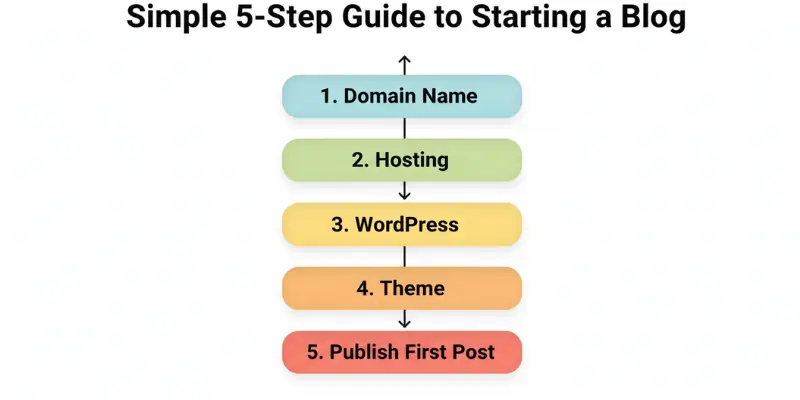
Step One: Choose a Domain Name
Your domain name is your web address. It should be short, easy to spell, and related to your niche without being so narrow that it limits you later. Think about what your blog will still cover in five years before locking in a name.
Step Two: Buy Hosting
Web hosting is where your website files live. For a new blog, Bluehost, SiteGround, or Hostinger all offer reliable beginner plans at $3 to $10 per month. Most include a free domain name for the first year and one-click WordPress installation.
Step Three: Install WordPress
WordPress powers more than 40 percent of all websites online. It is the most widely used blogging platform for a reason: it is flexible, well-supported, and has thousands of themes and tools available. The free version on your own hosting is the standard choice for serious bloggers.
Step Four: Choose a Simple Theme
Your theme controls the look of your site. For a new blogging side hustle, a clean, fast-loading free theme like Astra or Kadence is better than a complex premium theme. Speed matters for search rankings. Simplicity makes it easier to focus on what actually grows your blog: content.
Step Five: Write Your First Post
This is the step most people delay for too long while they tinker with design details that do not yet matter. The blog grows through posts, not through a perfectly designed homepage. Write your first post, publish it, and commit to the work of building.
How to Write Blog Posts That Actually Rank
Writing a post and having it rank on Google are two very different things. Here is what separates posts that get traffic from posts that nobody finds.
Answer a Specific Question
Each post should target one specific question that real people type into Google. “How to save money on groceries when you have a family of five” is a specific post. “Saving money tips” is too broad to rank for. Specific posts rank faster and attract more qualified readers.
Write for the Reader First
Search engines rank content that genuinely helps people. Write clearly, answer the question fully, and make your post easier to understand than the competing articles that currently rank for that term. That combination, clear writing plus genuine helpfulness, is the foundation of good SEO without any technical tricks.
Use a Simple Structure
Short paragraphs. Clear headings. Bullet points where lists are genuinely useful. Blogging readers scan before they read. A well-structured post keeps them engaged long enough to trust your recommendation or click your link.
Aim for 1,200 to 2,000 Words for Most Posts
Longer posts tend to rank better, not because length is valued in itself but because comprehensive answers tend to be longer. Do not pad your posts with filler. Write as much as the topic genuinely needs, and cut everything that does not serve the reader.
How to Build an Audience for Your Blogging Side Hustle
Writing great content is only half the work. Getting people to find and trust it is the other half.
Build an Email List From Day One
Your email list is the most valuable asset a blogging side hustle produces over time. Unlike social media followers, email subscribers chose to hear from you directly. Send a regular newsletter, weekly or biweekly, and give subscribers content that feels worth opening.
Ruth Henderson and her husband started collecting email subscribers from their very first post. Years later, that email list was the backbone of every sponsored content deal and product launch they did. Start building it before you think you need it.
Be Consistent, Not Prolific
Posting twice per week consistently for twelve months beats posting seven times in January and burning out by February. Consistency builds trust with both readers and search engines. One solid post per week is enough to grow a real audience over time.
Use Pinterest for Early Traffic
Pinterest works as a search engine for many niches, particularly in lifestyle, personal finance, home, food, and parenting. Creating simple pin graphics for each new post and publishing them consistently on Pinterest can drive significant traffic to a new blog before Google rankings develop. Many bloggers build their first 1,000 monthly visitors almost entirely through Pinterest.
Engage Genuinely in Your Community
Commenting on other blogs in your niche, answering questions in relevant Reddit communities or Facebook groups, and connecting with other content creators in your space all build awareness of your blog before you have significant search traffic. These relationships also lead to collaborations and link exchanges that help your SEO grow faster.
RELATED POSTS
Side Hustles Los Angeles: The Best Ways to Earn Extra in the City That Never Stops
Side Hustle Local Bothell: The Taproom Downtown Bothell Needed
The Married Nurse’s Secret Side Hustle: 15+ Real Ways to Earn More Without Burning Out
How to Make Money From a Blogging Side Hustle
This is where the blogging side hustle becomes a real income source. There are four main ways blogs earn money, and the best blogging businesses use a combination of all four.
Display Advertising
Ad networks like Google AdSense place advertisements on your blog and pay you based on the number of visitors who see or click those ads. The earnings are low early on, typically $5 to $20 per thousand visitors, but grow significantly as your traffic increases and you qualify for premium networks like Mediavine or Raptive.
Mediavine requires 50,000 sessions per month to join. Once accepted, bloggers typically earn $20 to $50 per thousand sessions, which means 100,000 monthly visitors generates $2,000 to $5,000 per month from ads alone. Jennifer Maker grew her blog to $100,000 per month, with a significant portion from premium display advertising.
Affiliate Marketing
Affiliate marketing means recommending products and earning a commission when your readers buy through your unique link. Amazon Associates is the most beginner-friendly option, paying 1 to 10 percent per sale. Niche affiliate programs often pay much more, with personal finance and software affiliates sometimes paying $50 to $200 per referral.
The most effective affiliate blogging does not feel like advertising. It feels like a genuine recommendation from someone who has actually used the product. Write honest reviews, compare real options, and recommend only things you would suggest to a friend. That approach builds the reader trust that makes affiliate income sustainable.
For anyone interested in making income from writing that compounds over time, affiliate blogging is one of the most scalable expressions of that model.
Sponsored Content
As your blog grows an audience, brands in your niche will offer to pay you for featuring their products or services in your content. Sponsored post rates vary enormously depending on your audience size and engagement, from $100 for a small niche blog to $10,000 for an established site with a highly engaged email list.
Building a media kit, a simple document that shows your traffic numbers, audience demographics, and rate card, makes it easier to approach brands and respond to inquiries professionally when they come in.
Your Own Products and Services
Selling something you created is the highest-margin income stream available to a blogger. Digital products like eBooks, templates, planners, and online courses cost almost nothing to produce and deliver and can be sold repeatedly without any additional work.
Bloggers who build an email list of engaged readers around a specific problem often find that their own product, created specifically to solve that problem, outearns every other income stream on their blog. A $49 course sold to 100 email subscribers generates $4,900 in a single launch. That kind of result comes from audience trust built over months of genuinely helpful content, which is the same principle behind digital products that keep earning after the initial creation.
Realistic Blogging Side Hustle Income Timeline
Understanding this timeline before you start saves enormous frustration.
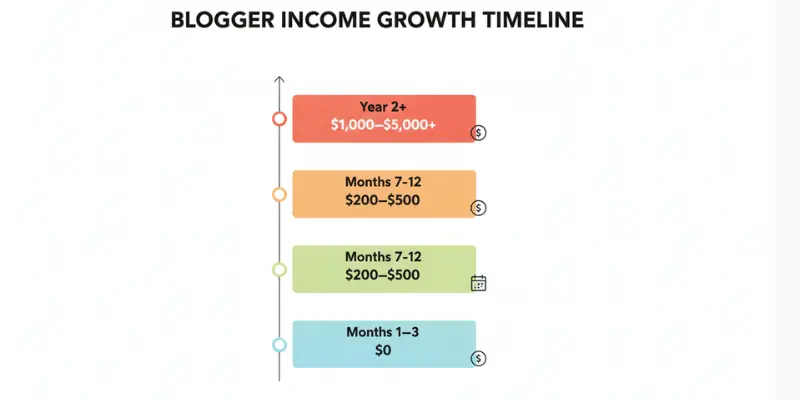
Months one through three: Essentially zero income. You are writing content, building the site, and starting to appear in search results. This phase is entirely about laying the foundation.
Months four through six: First small earnings from affiliate links or early ad revenue. Monthly income of $10 to $100 is realistic and is a genuine sign of progress.
Months seven through twelve: Traffic grows more consistently as older posts compound in search rankings. Monthly income of $200 to $500 is achievable for bloggers who have published consistently and focused on the right topics.
Year two and beyond: Bloggers who keep going often see significant jumps in income as their domain authority grows and older content continues to rank higher. Monthly income of $1,000 to $5,000 becomes realistic for focused, consistent blogs with genuine monetization strategies in place.
These are realistic middle-range numbers. Some people move faster. Some move slower. The pattern is consistent: the income comes after the trust, and the trust comes after the content.
Common Blogging Side Hustle Mistakes to Avoid
Choosing a topic you cannot sustain. Writing about something because it seems profitable but does not genuinely interest you leads to burnout before the income arrives. Passion and profit need to overlap.
Expecting results in the first month. Blogging is a long game. New blogs take three to six months to gain traction in search results. Expecting fast results and quitting early is the most common reason blogging side hustles fail.
Writing without a keyword strategy. Publishing posts without checking whether people are actually searching for that topic means your best writing might never be found. A basic keyword research habit before each post dramatically improves your traffic over time.
Ignoring the email list. The email list is the part of a blogging side hustle that most beginners put off. Starting it from post one, even before you have readers, means you never have to build it under pressure.
Trying to do everything at once. SEO, Pinterest, Instagram, YouTube, TikTok, email newsletters, and three posts per week is too much for one person managing a side hustle alongside a full-time job. Pick one traffic source, master it, and expand from there.
Who Is a Blogging Side Hustle Right For?
Blogging works best for people who genuinely enjoy writing, have a topic they know well and care about, and can commit to consistent effort over a period of months before seeing results.
It is one of the best remote income options you can build entirely from home with no client meetings, no commute, and no fixed schedule. You write when you want, post when you are ready, and grow at a pace that fits your life. This solitary, deep-focus nature is also why blogging consistently ranks among the strongest options for people who would rather build something quietly than constantly network.
Women building income around family and other commitments find blogging particularly well-suited to their needs. The flexible schedule, the ability to work in short time blocks, and the passive income potential all align with the way women are choosing to build income that fits around their actual lives.
Students with strong writing skills and a focus area related to their studies or interests have a genuine head start. The options that work for students building income early in their adult lives are few that offer both low startup cost and high income ceiling. Blogging is one of the rare exceptions, and the same applies to younger teens experimenting with their first income project, since a blog costs almost nothing to start and does not require a minimum age the way most paid platforms do.
Getting Started With Your Blogging Side Hustle Today
The most important step in starting a blogging side hustle is the one that most people delay the longest: publishing the first post. Not outlining it. Not designing the logo. Publishing it.
Choose your topic today. Register your domain this week. Install WordPress over the weekend. Write your first post before the end of the month. That sequence, simple as it sounds, puts you further ahead than the vast majority of people who think about starting a blog but never do.
The people who have already built real income from blogging all started the same way. They picked a topic, started writing, and kept going when the early results were invisible. The first step in building something that earns on the side is always the smallest one on the list.
Conclusion: Is a Blogging Side Hustle Worth It?
Yes, if you have the patience for it. A blogging side hustle is one of the few income models that genuinely rewards consistency over time with compounding results. The same post that earned $5 in its first month can earn $50 in month twelve as your domain authority grows and search rankings improve.
It is not the right side hustle for people who need income in the next thirty days. It is not right for people who hate writing. And it is not right for people who want a simple, predictable hourly rate for the effort they put in.
But for people who want to build something lasting, something that earns while they sleep, something that grows every month even when they are not actively working on it, a blogging side hustle is one of the best options in the entire side hustle world. Start small, stay consistent, and give it a real runway to grow.
Frequently Asked Questions About Blogging Side Hustles
What is a blogging side hustle?
A blogging side hustle involves creating and growing a website around a specific topic to earn income through advertising, affiliate marketing, sponsored content, or digital products.
How much can you earn from a blogging side hustle?
Income varies widely. New blogs may earn little at first, while established blogs with consistent traffic can generate thousands of dollars per month.
How long does it take to make money blogging?
Most bloggers begin seeing meaningful earnings after several months of consistent publishing, with larger income typically taking one to two years to build.
How much does it cost to start a blogging side hustle?
Starting a blog is relatively inexpensive. Basic hosting and a domain name often cost less than fifty dollars during the first year.
What is the best topic for a blogging side hustle?
The best topic combines personal knowledge, audience demand, and monetization potential. Popular niches include finance, health, travel, parenting, and online business.
Do you need to be a good writer to start a blog?
No. Successful blogging depends more on clear, useful information than advanced writing skills. Readers value helpful content that solves problems.
Can you start a blog with no experience?
Yes. Many successful bloggers started with no technical or writing background and learned through practice while growing their websites.
What are the best ways to make money from a blog?
The most common methods include display ads, affiliate marketing, sponsored partnerships, and selling digital products such as courses, templates, or eBooks.

4 Comments
Pingback: Medical Side Hustles: 16 Ideas, Honest Pros & Cons
Pingback: Nurse Side Hustles: 15 Ideas For RNs, LPNs And NPs
Pingback: Side Hustles For Players: 15 Real Ways To Earn (2026)
Pingback: AI Side Hustles 2026: 12 Realistic Ways To Earn