

Medical side hustles are paid jobs or small businesses that healthcare workers and students run on top of their main role. Some use your license, like telehealth shifts or extra clinic hours. Others use only what you know, like medical writing, tutoring, or chart review.
This guide covers 16 options for a global and US audience. It compares them side by side and explains the rules most guides skip: employer contracts, licensing, malpractice cover, and privacy. Pay changes by country, role, and demand, so you will not find promised income figures here.
Table of Contents
What Counts as a Medical Side Hustle?
A medical side hustle is any extra paid work tied to healthcare that you do outside your main job or studies. It can be a few hours a month or a steady weekly commitment.
Most healthcare side hustles fall into two groups:
- Clinical: You treat or care for patients, such as telehealth visits or vaccination clinics.
- Non-clinical: You use your knowledge without direct patient care, such as writing, consulting, or teaching.
Nearly all of them are active income, meaning you get paid when you do the work. A few, like a course or a health blog, can become more hands-off later, but only after a lot of early effort.

Why Healthcare Workers Take On Medical Side Hustles
Money is the most common reason. In Sermo’s survey of its physician members, one in two doctors reported having a side gig, and 41% named extra income as the main benefit. Improving skills (21%), growing a network (17%), and building a reputation (12%) followed. Keep in mind that Sermo sells paid surveys, so treat its numbers as one company’s member data.
Burnout is the other driver. Sermo’s nurse guide cites a 2020 American Nurses Association survey in which roughly six in ten nurses reported burnout. That matters, because the wrong side gig can make it worse. Some people use side work to test a new direction, which is why many of the options below are non-clinical.
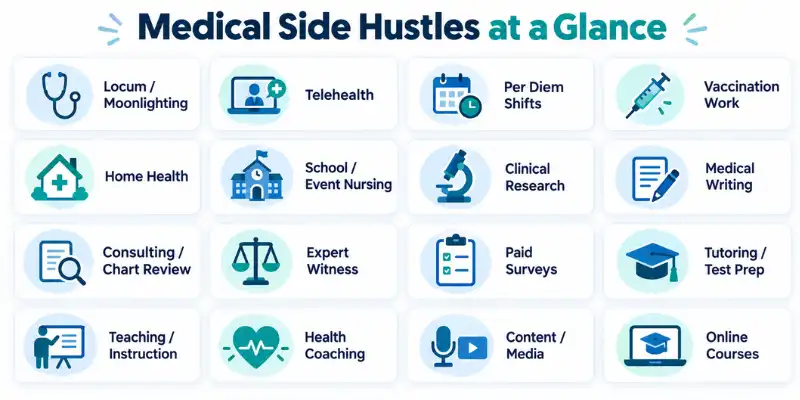
Medical Side Hustles at a Glance
| Side Hustle | Best For | Startup Cost | Flexibility | Main Catch |
| Locum or moonlighting shifts | Physicians, PAs, NPs | Low to moderate | Medium | Credentialing and contract limits |
| Telehealth shifts | Licensed clinicians | Low | High | Licensing where the patient is |
| Per diem shifts | Nurses | Low | Medium | Adds fatigue |
| Vaccination work | Nurses | Low | Medium | Often seasonal |
| Private duty and home health | Nurses | Low | Medium | Physical, little backup |
| Camp, school, and event nursing | Nurses | Low | Low to medium | Seasonal |
| Clinical research roles | Nurses, physicians | Low to moderate | Medium | Degree or certification needs |
| Medical writing | Anyone with clinical knowledge | Low | High | Slow start |
| Consulting and chart review | Experienced clinicians | Low | High | Finding clients |
| Expert witness and medico-legal work | Experienced clinicians | Low to moderate | Medium | Scrutiny and legal process |
| Paid surveys and expert panels | Doctors, NPs, PAs, nurses | Very low | High | Small, uneven pay |
| Tutoring and test prep | Clinicians and students | Low | High | Demand varies |
| Teaching and instruction | Credentialed clinicians | Low to moderate | Medium | Certification rules |
| Health coaching | Clinicians | Moderate | High | Scope and marketing limits |
| Content, media, and speaking | Clinicians who like communicating | Low | High | Slow to earn, policy limits |
| Online courses and study materials | Experienced clinicians, students | Low to moderate | High | Heavy upfront work |
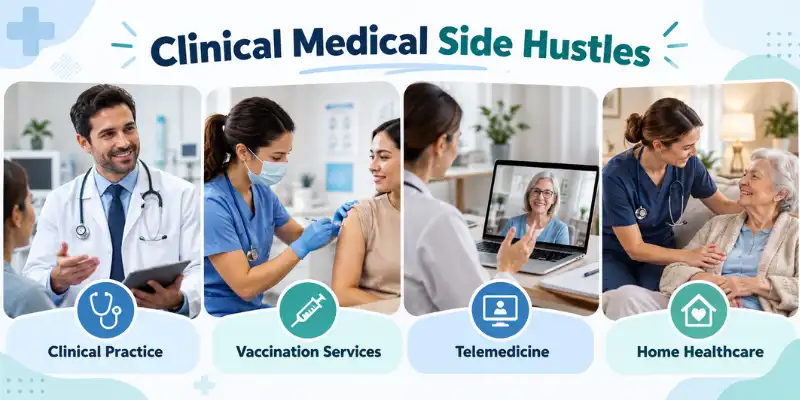
Clinical Medical Side Hustles
1. Locum Tenens and Moonlighting
Locum work means filling in at another hospital or clinic for a set period. Moonlighting means picking up extra shifts outside your main job. You choose how often to work, and some people grow it into a bigger income. The catch is paperwork. New sites usually need their own credentialing, and your main employer’s contract may limit outside work.
2. Telehealth Shifts
Telehealth lets licensed clinicians see patients by video, phone, or chat, often from home. It suits short blocks of time and removes the commute. The hard part is licensing, since you generally need to be licensed where the patient is. Nurses may use the Nurse Licensure Compact, which gives eligible RNs and LPN/VNs one multistate license for in-person and telehealth care in member states. Physicians can use the Interstate Medical Licensure Compact to speed up applications, though each state still issues its own license. Check the current member list on the compact’s official site. For more work-from-home ideas, see our list of remote side hustles.
3. Per Diem and Extra Nursing Shifts
Hospitals, clinics, and staffing apps let nurses pick up shifts without a long-term commitment. Outpatient clinics often feel calmer than hospital floors. Be honest about recovery time, because tired clinicians make more mistakes. Per diem work also rarely comes with benefits or guaranteed hours.
4. Vaccination and Immunization Work
Vaccination nurses check that patients can safely receive a vaccine, then give it, often at workplaces and community sites. Work comes in bursts, such as flu season. It suits people who like short, clear tasks and a change of scenery.
5. Private Duty and Home Health
Private duty nurses often care for one patient for a full shift, short term or long term. The work is steady and personal. It can also be physical, and you may have less backup than in a hospital. Rules about licensing and supervision depend on where you live.
6. Camp, School, and Event Nursing
Camps, schools, and events often need a nurse on site for basic care and emergencies. Substitute school nursing can fit around your regular schedule. These jobs are seasonal, so they work as a small boost, not a steady income.
7. Clinical Research Roles
Studies and trials hire nurses and physicians part-time for patient visits, data work, and advisory roles. Some positions ask for a degree above a bachelor’s or a research certification. It is a good fit if you want less physical work and an inside view of how new treatments are tested.
Non-Clinical Medical Side Hustles
Non-clinical medical side hustles trade patient contact for flexibility. Most are project-based, so you can say no when you are tired. They also tend to take longer to build, because clients and audiences do not appear overnight.

1.Medical Writing
Medical writers create content for journals, patient education groups, health companies, and continuing education providers. Clinical knowledge gives you an edge, since many writers lack it. The American Medical Writers Association has resources and a job board, as noted in CNBC’s report on nurse side hustles. Build a few samples before you pitch. Our guide to freelance writing side hustles covers finding clients and setting rates.
2. Consulting and Chart Review
Device makers, health tech startups, insurers, and law firms pay clinicians to review products, records, and plans. The White Coat Investor lists consulting and chart review among common options for physicians. Most work comes through your network, so LinkedIn and past colleagues matter more than job boards. Because chart review is quiet, reading-based work, it also appeals to the side hustles for introverts crowd.
3. Expert Witness and Medico-Legal Work
Lawyers and insurers hire experienced clinicians to review cases, give opinions, and sometimes testify. It needs real experience, a clean record, and comfort with scrutiny. It is not a beginner option, and claims that it always pays more than clinical work are not backed by figures.
4. Paid Surveys and Expert Panels
Research companies pay clinicians for opinions in surveys, interviews, and longer panels. Sermo’s data shows it is the most common physician side gig, with 33% of its surveyed members taking part. The pay is small and uneven, and invitations depend on your specialty. Treat it as pocket money, not a plan.
5. Tutoring and Test Prep
Students in nursing, medical, and PA programs look for help with anatomy, pharmacology, and exams. Online group sessions can earn more per hour than one-on-one sessions, an idea also made by More than Medics. Our tutoring side hustle guide covers pricing and finding students.
6. Teaching and Instruction
Adjunct faculty roles, community health classes, and instructing for certifications such as BLS and ACLS all fit here. Teaching often needs one big push to build materials, then a smaller effort to repeat them. Some roles ask for a graduate degree or instructor certification, so check first. If you enjoy this work, our list of side hustles for teachers shows how other teachers earn extra.
5. Health Coaching
Some clinicians coach people on habits, nutrition, or long-term conditions. It can be rewarding, but know where coaching ends and medical advice begins. Check your license, your local rules, and your employer’s policy before you take paying clients.
6. Content Creation, Media, and Speaking
A podcast, newsletter, or video channel lets you explain health topics to a wide audience. Local news, radio, and events also look for clinician experts. Monetizing takes time, and nothing is guaranteed. Many employers limit social media use, so read your policy first, and never share patient details, even without names. Our blogging side hustle guide explains how to start.
7. Online Courses and Study Materials
Experienced clinicians can build courses for patients, students, or peers. Students sometimes sell their own notes. This is not instant income. A course takes months of work before the first sale, and it needs marketing afterward. For realistic expectations, read about online passive income before you start. If you sell study notes, check school rules and copyright first.
Outside medicine: Some higher-earning clinicians also look at property. It is not a medical side hustle, and it carries real financial risk, so read about passive real estate investing before you put money in.
Medical Side Hustles by Role
Doctors. Side hustles for doctors often center on locums, telehealth, consulting, expert review, and teaching. Many doctors prefer non-clinical work because they already spend long hours with patients. A common question is whether doctors can work from home. Yes, telehealth, writing, consulting, and chart review can all be done remotely, as long as you follow licensing rules for where your patients live.
Physician assistants and nurse practitioners. Physician assistant side hustles often mirror the doctor list: telehealth, extra shifts, research roles, writing, and teaching. Scope of practice and supervision rules differ by state and country, so confirm what you may do on your own. The same applies to side hustles for nurse practitioners.
Nurses. Side gigs for nurses cover the widest range, from per diem shifts to writing and research. For context, the US Bureau of Labor Statistics reported a median pay of $93,600 a year for registered nurses in May 2024, and newer releases may show a higher figure. Pay for side work varies by state and specialty. Our story on a married nurse’s side hustle shows one real path.
Medical students. Side hustles for medical students must fit a packed schedule and school rules. Common choices are tutoring, writing, paid surveys where eligible, and summer work as a healthcare assistant, lab helper, or research assistant. Our guide to side hustles for students has more ideas, and some students also do virtual assistant work for practices.
RELATED POSTS
Side Hustles Los Angeles: The Best Ways to Earn Extra in the City That Never Stops
Rules to Check Before Starting Medical Side Hustles
Most problems with medical side hustles come from skipped paperwork, not bad ideas. HealthECareers advises checking with HR and reading your policy manual, plus noncompete clauses, practice laws, and HIPAA. Use this checklist:
- Your employer contract. Many contracts limit outside work or require approval.
- Malpractice cover. Your main policy may not cover side work.
- Licensing. Practice only where you hold a valid license, including for telehealth.
- Scope of practice. Stay within what your license allows.
- Privacy. Follow HIPAA in the US or your local privacy law. Never share identifiable patient details.
- Social media policy. Many workplaces limit posting.
- Taxes. Side income is often taxed separately. Ask a tax professional in your country, since rules vary widely.
- Rest. If a side gig leaves you exhausted, patient safety is at stake.
I am not a lawyer or a tax advisor, so use this as a list of questions, not professional advice.
Pros and Cons
Medical side hustles can help your wallet and your career, but they also take time and energy from a week that is already full. Looking at both sides first makes it easier to decide if the trade is worth it for you. The lists below show what most healthcare workers and students gain, and what they should watch for.
Pros
- Extra income for debt, savings, or a safety cushion
- New skills and contacts outside your usual setting
- A way to test a career change without quitting
- Options for most schedules and energy levels
Cons
- Less rest, which can worsen burnout
- Contract, licensing, and insurance rules to manage
- Uneven pay, especially at the start
- Taxes and paperwork for self-employed work
The main benefit of medical side hustles is choice. The main risk is taking on more than your week can hold.
Common Mistakes to Avoid
- Saying yes to too much. Start with one side hustle and a small weekly time limit.
- Skipping the contract. A gig that breaks your employment terms can cost more than it earns.
- Chasing the highest hourly rate. Pick work you can still do when you are tired.
- Expecting fast results. Writing, consulting, courses, and content need months to build.
- Believing “passive” promises. Courses and blogs need heavy upfront work.
- Mixing patient information into content. One careless post can cause real harm.
- Ignoring taxes. Set money aside as you earn it.
Who Should Wait
Wait if you are working long overtime, recovering from burnout, or short on sleep. Wait too if your contract bans outside work and you cannot get approval. And if you want guaranteed money, know that none of these options provides it. Earnings depend on skills, location, demand, pricing, competition, and how well you find clients.
How to Choose the Right One
- Count your free hours honestly, then cut that number by a third.
- Decide clinical or non-clinical. Do you want more patient care or a break from it?
- List your must-haves: work from home or on site, solo or with people, one-on-one or large groups.
- Check the rules from the list above.
- Start small. Try one option for a month before adding another.
- Review it. If it hurts your sleep, your day job, or your mood, change course.
New to the whole idea? Our guide on how to start a side hustle covers the basics. For general ideas outside healthcare, see our main list of side hustles, and for US-specific options, our roundup of side hustles across the USA.
Conclusion
The best medical side hustles match your energy, your license, and your contract. You do not need to try all 16. Choose one that fits your schedule, keep the hours small, and check the rules before your first paying job.
Here is a simple way to begin today:
- Pick one idea from the table above. Choose clinical work if you want faster pay, or non-clinical work if you want more control over your time.
- Read your employer contract and note anything about outside work, insurance, or licensing.
- Set a small weekly limit, such as two or three hours, and try it for one month.
- Review how you feel. If your sleep, your main job, or your mood suffers, change the plan.
If you want a clear starting plan, follow our step-by-step beginner plan for launching a side hustle. If you also want ideas outside healthcare, browse our full collection of side hustle ideas and see what else could fit your life.
Your skills are in demand in many places. Start with one step this week, and build from there.
Faqs
It depends on your role and free time. Telehealth, per diem shifts, medical writing, consulting, and tutoring are among the most common choices.
Yes, in some roles. Telehealth, consulting, writing, and chart review can be done remotely if you follow licensing rules for your patients’ location.
Common options include per diem shifts, vaccination work, private duty care, school or camp nursing, research roles, writing, and tutoring.
Yes. PAs often do telehealth, extra clinical shifts, research work, writing, and teaching. Check your local supervision and scope rules first.
Many do, usually through tutoring, writing, or healthcare assistant work during the summer. Check your school’s policy and protect your study time.
Often, yes. Read your employment contract and ask HR if the wording is unclear.
Mostly no. Most require your time. A course or blog may become more hands-off later, but only after substantial upfront work.
Earnings vary too much to give one reliable figure. Pay depends on your role, location, skills, demand, and available time. Be wary of any guide that promises a specific amount.

1 Comment
Pingback: Nurse Side Hustles: 15 Ideas For RNs, LPNs And NPs