

Guys, ever wondered why some people seem to earn money easily while others struggle despite working hard? Don’t worry, we’ve got you covered. In this guide, we will explore everything about active income, how it works, ways to earn it, its benefits, limitations, and tips to maximize your earnings. By the end, you’ll have a clear idea of how to make your work pay off smarter.
Table of Contents
What Is Income?
Income means money you receive regularly by working, doing business, or earning from different sources. It helps you pay for daily needs like food, rent, education, and bills. In simple words, income is the money that comes into your life.
Many beginners start learning about money by understanding active income, because it is the most common way people earn money.
Meaning of Source of Income
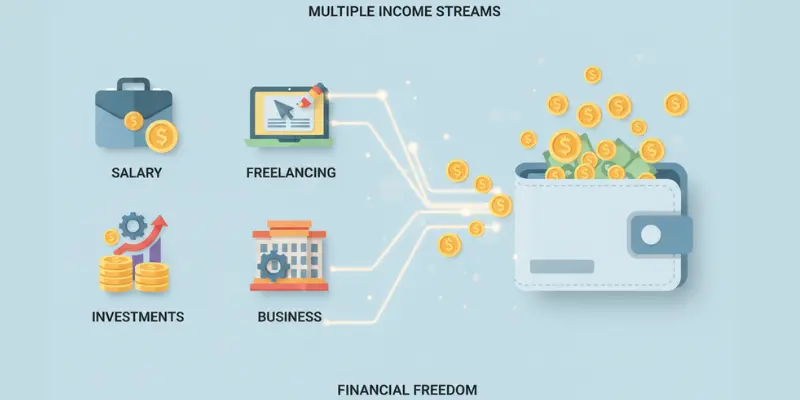
A source of income is where your money comes from. Every person earns money from one or more sources depending on their skills and work.
Common income sources include:
- Salary from a job
- Freelance work or online services
- Business profits
- Rental payments
- Investments
For example, if you work as a teacher and receive a monthly salary, your job is your income source. This is also called active income because you earn money by working actively.
Ask yourself: Where does your money come from right now?
Knowing your income source helps you plan your finances better.
Types of Income Sources
There are different types of income sources, but beginners should first understand two main categories:
Active Income
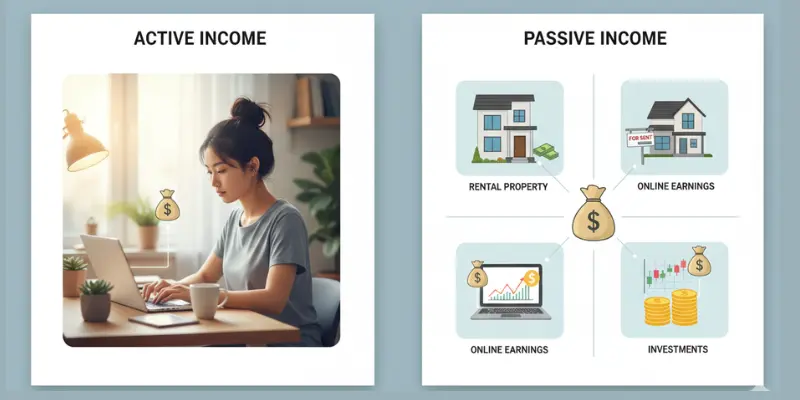
You earn money by giving your time and effort. If you stop working, the income stops.
Examples:
- Office job salary
- Freelancing projects
- Part-time work
- Teaching or tutoring
Passive Income
You earn money with less daily effort after initial setup.
Examples:
- Rental income
- YouTube earnings
- Digital product sales
- Investments
Most people start with active income before building other income streams.
Characteristics of Income
Income usually has some common features. Understanding these characteristics helps beginners manage money wisely.
- Regular flow – Income often comes weekly or monthly.
- Effort-based – Many earnings require skills or work.
- Purpose-driven – People earn income to cover expenses and save money.
- Variable or fixed – Some income stays the same, while some changes each month.
For example, a fixed salary is stable active income, while freelance earnings may change every month.
Income Examples (Real-Life Situations)
Here are simple income examples to make things clear:
- A student doing online writing jobs earns active income.
- A shop owner earns income from selling products daily.
- A graphic designer earns money from client projects.
- A landlord earns rental income from property.
Each example shows how income works in real life. Most beginners rely on active income first because it is easier to start and requires skills instead of large investments.
What Is Active Income?
Active income is the money you earn by working or providing a service. You receive payment because you spend time, effort, or skills to complete a task. If you stop working, the income usually stops too.
Most people begin their financial journey with active income because it is the easiest and most direct way to earn money.
Active Income Definition
The active income definition is simple:
Active income is money earned through physical or mental work.You exchange your time and skills for payment. This payment can be hourly wages, a monthly salary, or project-based earnings.
Common sources include:
- Full-time jobs
- Part-time work
- Freelancing
- Service-based businesses
For example, when a teacher teaches students and receives a salary, that money is active income.
Active Income Meaning
The active income meaning becomes clearer when you think about effort. You must stay actively involved to keep earning.
Here’s an easy way to understand it:
- Work = Income continues
- Stop working = Income stops
A graphic designer working on client projects earns only when projects are completed. This shows how active income depends on personal effort.
Examples of Active Income
Let’s look at real-life examples of active income so beginners can understand easily:
- Salary from an office job
- Freelance writing or SEO services
- Online tutoring or coaching
- Driving for delivery services
- Selling handmade products directly to customers
For instance, a freelancer who writes articles and gets paid per project earns active income because they actively complete the work.
Earned Income Explained
Earned income is another name often used for active income. It means money earned through personal effort or services.
Earned income includes:
- Wages
- Salaries
- Bonuses
- Commissions
- Freelance payments
Example:
If a student offers social media management services and gets paid monthly, that payment is earned income and also active income.
What Is Passive Income?
Passive income is money you earn without working every day for it. You usually put in effort at the beginning, and later the income continues with little daily work. Unlike active income, where you must work regularly, passive income can keep coming even when you are not actively involved.
Many people start with active income first and then build passive income for long-term financial stability.
Passive Income Definition
Passive income is money earned from assets, systems, or investments that require minimal ongoing effort. You may work hard once to set it up, but after that, income comes automatically or semi-automatically.
Examples of setup work include:
- Creating a digital product
- Buying a rental property
- Investing money
This differs from active income, where payment depends on daily work.
Passive Income Meaning
The passive income meaning becomes easy to understand when you compare effort levels.
- Active income → You work daily to earn.
- Passive income → Your system or asset works for you.
For example, if you create an online course once and students keep buying it later, you earn passive income without repeating the same work every day.
What Qualifies as Passive Income
Not every earning counts as passive income. Some conditions help define it clearly.
Income usually qualifies as passive when:
- It does not require daily active work
- It continues after initial effort
- It comes from investments or assets
- Maintenance effort is low
For instance, rental income from property qualifies as passive income, while freelancing does not because freelancing is active income.
Passive Income Examples
Here are simple passive income examples beginners can understand:
- Rental income from property
- Earnings from YouTube videos
- Selling eBooks or digital templates
- Affiliate marketing commissions
- Stock or dividend investments
Example: A designer creates a digital planner once and sells it online for months. That ongoing earning becomes passive income, unlike active income projects that require constant work.
Passive Business Income
Passive business income comes from businesses that run with systems or teams instead of daily personal effort.
Examples include:
- Online stores with automated orders
- Apps or software subscriptions
- Franchise businesses managed by staff
At the beginning, business owners often rely on active income to build the business. Later, systems and automation help turn it into passive income.
How Active Income Works
Active income is money you earn by working. You get paid when you use your skills, time, or effort. If you stop working, the income usually stops too.
Methods of Earning Active Income
People earn active income in different ways depending on their skills and how much they work. This is the most common way to start earning money.
- Full-time jobs – Regular salary from a company.
- Part-time jobs – Work fewer hours but still earn wages.
- Freelancing – Paid per project or task for clients.
- Consulting – Share your expertise and get paid.
Example: A teacher earns a monthly salary by teaching students. This is active income because the teacher must work regularly to earn it.
Benefits of Active Income
Active income is easy to start and gives regular rewards. Beginners often rely on it because it provides financial stability.
- Immediate cash flow – You get paid regularly.
- Easier to start – Many jobs require basic skills to begin.
- Predictable payments – Salaries or hourly wages are steady.
Tip: Ask yourself, Do you like steady income or flexible work? This helps you decide if active income suits your lifestyle.
Limitations of Active Income
Even though active income is reliable, it has limits. You must work to earn, and earnings can’t grow much without more effort.
- Money stops if you don’t work – No work means no pay.
- Limited scaling potential – You can only earn more by working more hours or charging higher rates.
- Real-life example: A freelancer can’t take a vacation without losing income.
The 3 Types of Income Explained
Understanding different types of income helps you plan your money better. Most beginners start with active income and later explore other ways to earn, like passive or portfolio income. Here’s a simple breakdown of the three main types:
Earned (Active) Income
Earned income, also called active income, is money you get by working. You trade your time, effort, or skills for payment. If you stop working, this income stops too.
- Full-time jobs – Monthly salary from a company.
- Part-time jobs – Work fewer hours but still get paid.
- Freelancing – Paid per project or task for clients.
- Consulting – Using expertise to earn money.
Example: A teacher earning a monthly salary is a classic case of active income because it depends on consistent work.
Passive Income
Passive income is money you earn with little daily effort after the initial setup. Unlike active income, you don’t need to work every day to keep it coming.
- Rental income from property
- Earnings from online courses or digital products
- Affiliate marketing commissions
- Dividend payments from stocks
Example: Creating a digital planner and selling it online generates ongoing income with minimal daily effort.
Portfolio Income
Portfolio income comes from investments. This type of income grows your money over time without you trading daily hours. It is different from active income because it relies on assets rather than personal effort.
- Stocks and bonds – Earn dividends or interest.
- Mutual funds – Gains from investments in multiple companies.
- Real estate investments – Profits from properties or REITs.
Example: Buying stocks that pay dividends creates portfolio income. You earn money while the investment grows, even if you aren’t actively working.
Active Income vs Passive Income (Key Differences)
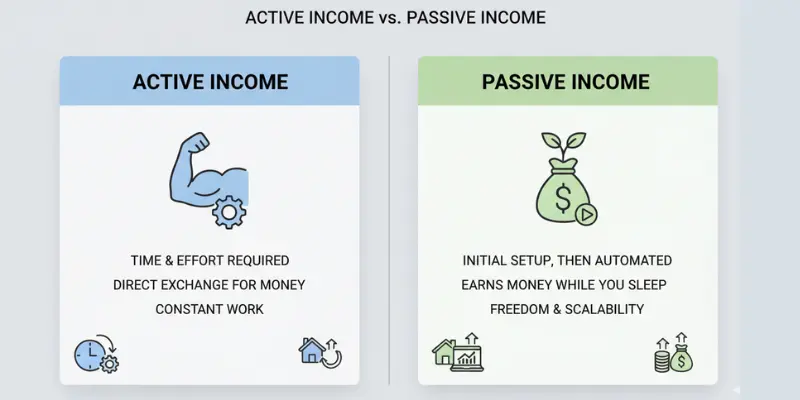
Understanding the differences between active income and passive income helps you plan your money wisely. Most beginners start with active income and later explore passive income for long-term growth.
Here’s a simple comparison:
| Feature | Active Income | Passive Income |
| Effort | Requires daily or regular work | Effort is mostly upfront; minimal ongoing work |
| Time Dependency | You must work to earn | Income continues even without daily work |
| Scalability | Limited; you earn more only by working more | High; can grow without working more hours |
| Tax Treatment | Usually taxed as ordinary income | Often taxed differently (e.g., capital gains, dividends) |
| Risk Level | Lower risk if you have a stable job | Can be higher depending on investment or business setup |
Quick Example:
A freelancer earning per project relies on active income. If they stop working, the money stops. Meanwhile, rental income from a property continues even if they take a vacation, which is passive income.
Tip: Use active income to cover immediate needs and build skills. Then gradually invest in passive income streams to grow wealth without constant work.
Examples of Active Income
Active income comes from work you do regularly. It depends on your time, effort, or skills. Most people start earning through active income before exploring other income types.
Common Examples of Active Income
Here are simple examples that show how active income works in real life:
- Salary from a company job – Regular monthly payment for your work.
Mini case study: Emily works at a marketing firm and earns $3,000 per month. - Hourly wages for part-time work – Paid for each hour you work.
Mini case study: Alex works at a cafe and earns $15/hour. - Freelance writing, graphic design, or programming – Paid per project or task.
Mini case study: Sara works as a graphic designer and earns $30/hour. - Consulting or coaching fees – Using your expertise to advise others for money.
Mini case study: David provides fitness coaching online and earns $50 per session.
Quick Tip: Keep track of your work hours and rates. Improving skills or adding side projects can help increase your active income steadily.
Can You Turn Active Income Into Passive Income?
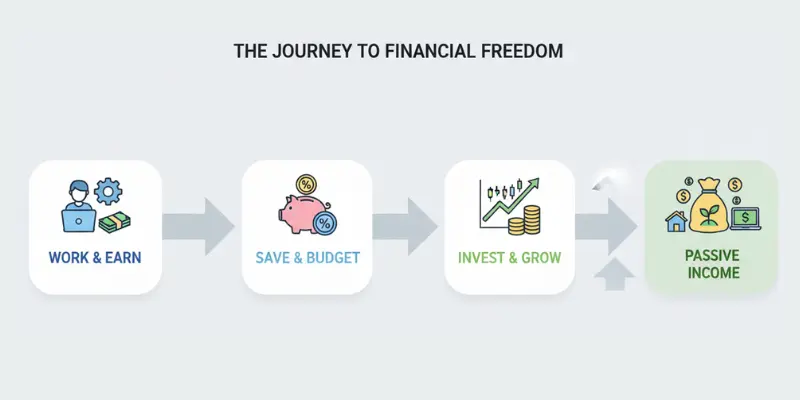
Yes! You can use your active income to create passive income over time. This is a smart way to grow wealth because you first earn money by working, then invest it in systems, assets, or projects that earn money for you automatically.
How to Convert Active Income into Passive Income
Here are simple steps to turn your active income into passive income:
- Save a portion of your active income – Set aside some earnings each month to invest.
- Invest in assets – Buy rental property, stocks, or bonds that generate income.
- Create digital products – Courses, eBooks, or templates that sell repeatedly.
- Automate a small business – Use systems or hire staff to run your business while you focus on other work.
Example: Maya works a full-time job (active income) and uses part of her salary to buy dividend-paying stocks. Over time, the dividends become a source of passive income while she continues her job.
Quick Tip: Start small. Even small contributions from your active income can grow into a reliable passive income stream over time.
Tips to Maximize Active Income
Active income can grow if you make smart choices and improve your skills. Even beginners can increase their earnings by taking small steps.
Ways to Boost Active Income
Here are simple tips to maximize your active income:
- Ask for raises or higher rates – Don’t hesitate to negotiate your salary or project payment.
- Take on side gigs or freelance work – Extra projects increase your total income.
- Learn new skills to increase value – Skills like digital marketing, design, or coding make you more valuable.
Real-life Tip:
John doubled his active income by adding freelance work after his regular job hours.
Quick Advice: Track your current earnings and look for ways to add more value. Small improvements in skills or extra work can significantly increase your active income over time.
Common Misconceptions About Active Income
Many beginners have wrong ideas about active income, which can affect how they plan their finances. Understanding the truth helps you earn smarter and grow your money.
Misconception 1: Active Income Is Always Enough
Some people think active income alone is enough to build wealth. While it covers daily expenses, relying only on it may limit long-term financial growth.
- True wealth often comes from combining active income with passive or portfolio income.
- Example: A teacher earns a good salary (active income) but still needs extra investments to save for early retirement.
Misconception 2: You Can Earn Active Income Without Skills
Many believe anyone can earn active income easily. In reality, your skills, effort, and consistency determine how much you earn.
- Example: A freelancer without design or writing skills will struggle to get projects.
- Improving skills increases active income potential.
Misconception 3: Active Income Is Risk-Free
Some think stable jobs are completely safe. While active income is usually steady, it depends on continued work.
- Losing a job or client can stop your income immediately.
- Example: A part-time worker loses hours due to company cutbacks, halting active income.
Misconception 4: You Cannot Increase Active Income
Many assume your active income is fixed. In reality, you can grow it by learning new skills, asking for raises, or taking side gigs.
- Example: John increased his freelance active income by offering new services to clients.
Conclusion
Guys, in this guide we covered everything about active income what it is, how it works, its benefits and limitations, examples, and ways to maximize it. We also looked at how it compares to passive and portfolio income, and how you can even use your active income to create passive income streams.
Here’s my personal recommendation: focus on building your active income first. It’s the foundation for your finances. Learn new skills, take on side gigs, and manage your work smartly. Once you have a steady active income, start exploring ways to earn passively to grow your wealth over time.
So buddies, keep improving, keep earning, and most importantly, keep learning about money and opportunities!
Faqs
Can active income become passive?
Yes! Some jobs allow you to create products or services that continue earning money later. For example, a freelance writer can turn articles into an eBook that sells online, generating passive income while still doing active income work.
Is active income more stable than passive income?
Usually, yes. Active income from a steady job or regular clients provides predictable payments. However, stability depends on your job, industry, or business. Freelancers may face fluctuations, unlike salaried workers.
Can students earn active income?
Absolutely! Students can earn active income through part-time jobs, tutoring, freelancing, or offering services online. Even a few hours a week can help build skills and earn money.
Can beginners start earning active income easily?
Yes, beginners can start easily. Many jobs and freelance skills require basic knowledge. With practice and consistency, income can grow over time.
Is active income enough to build wealth?
Active income helps cover daily expenses, but alone it may not be enough for long-term wealth. It’s better to combine it with passive or portfolio income.

4 Comments
Pingback: Medical Side Hustles: 16 Ideas, Honest Pros & Cons
Pingback: What Is Passive Loss? Rules, Limits & Examples
Pingback: Nurse Side Hustles: 15 Ideas For RNs, LPNs And NPs
Pingback: Side Hustles You Can Do From Your Phone (14 Real Ideas)