

Feeling unsure about whether real estate can really make money without daily work? Many people hear big claims and feel confused about what is true and what is hype. In this guide, we will clear that confusion and walk step by step through how passive real estate investing works in real life, what options you can choose, and what mistakes you should avoid.
Table of Contents
What Is Passive Real Estate Investing?
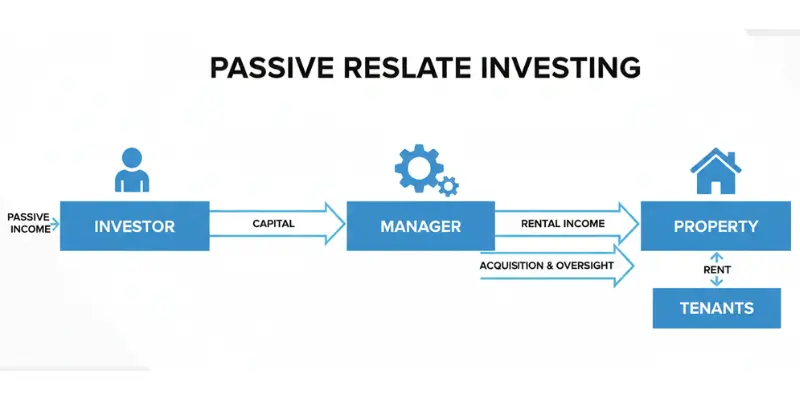
Passive real estate investing means you earn money from property without managing it daily. You put your money into real estate, and someone else handles the hard work like tenants, repairs, and rent collection. You mainly focus on earning returns, not running the property.
Difference from Active Investing
Many people mix passive and active investing, but they are very different.
- Active investing: You buy a property and manage everything yourself. You deal with tenants, fix problems, and handle rent.
- Passive real estate investing: You invest money, but another person or company manages the property for you.
For example, if you own a rental house and fix leaks yourself, that is active investing. But if you invest in a real estate fund or REIT and professionals manage everything, that is passive investing.
Why It Matters
Passive investing feels easier, but it still needs smart decisions. You are not working daily, but you must choose the right investment. A bad choice can still cause loss.
So, passive real estate investing is about earning with less effort, but not zero effort.
How Passive Real Estate Income Works
Passive income from real estate comes from a few simple systems. You invest money once, and income comes over time with less daily effort. Let’s look at the main models in a simple way.
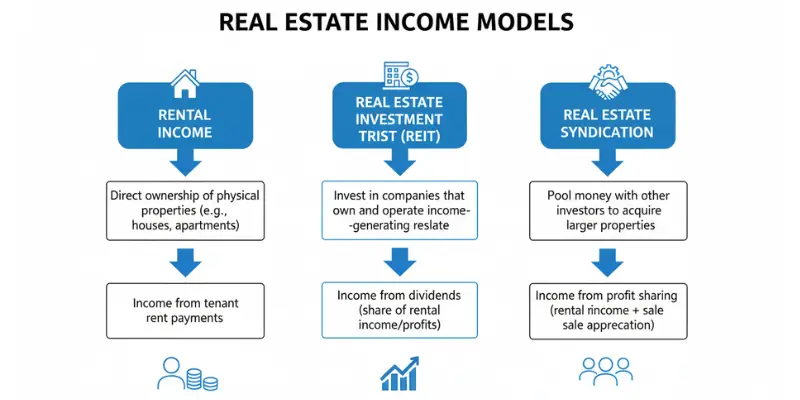
Rental Income Model
In this model, you own a property and rent it out.
- Tenants pay monthly rent
- That rent becomes your income
- A property manager can handle daily work
For example, you buy a small apartment and rent it to a family. Every month, you receive rent without working a full-time job in the property.
This is one common form of passive real estate investing, but it can still need some management if you don’t hire help.
REITs Model (Real Estate Investment Trusts)
REITs let you invest in real estate without buying property directly.
- You buy shares in a real estate company
- The company owns and manages properties
- You earn profits from dividends
It works like stock investing. You don’t deal with tenants or repairs. This makes it one of the easiest ways to earn passive income from real estate.
Syndication Model
In syndication, a group of investors pools money together.
- A lead investor finds and manages the property
- You invest money and get a share of profit
- You don’t handle daily tasks
For example, a group buys an apartment building, and you earn income based on your investment share.
Simple Takeaway
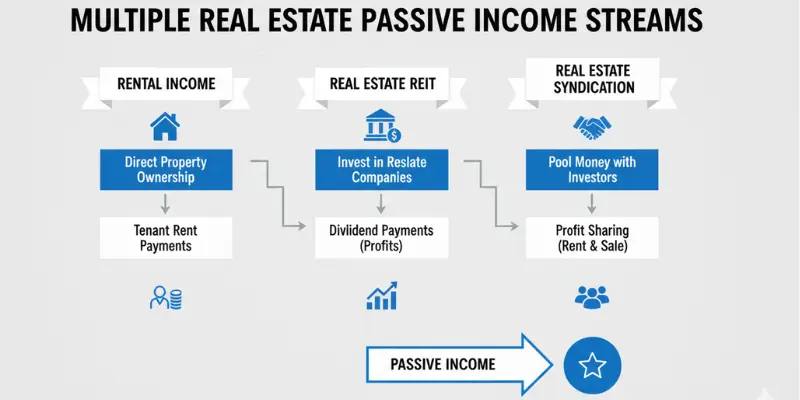
All these models are forms of passive real estate investing, but each has a different level of control and risk. Some need more money, some need more trust, but all aim to give you income with less daily work.
Best Ways to Invest in Real Estate for Passive Income
There are many ways to build passive income from real estate, but each method works differently. Some are very easy and hands-off, while others need a little involvement. Let’s break them down in a simple and clear way so you can choose what fits you best.
REITs (Most Passive Option)
REITs are one of the easiest ways to start REIT investing without buying physical property. You simply invest money in a real estate company, and they manage everything for you.
Easy entry
You can start with small money, just like buying stocks. There is no need for a big budget or property purchase. It is very beginner-friendly.
No property management
You don’t deal with tenants, repairs, or legal issues. Everything is handled by professionals, so your role stays fully passive.
- Low starting cost
- Easy to buy and sell
- No daily work needed
Example: If you invest in a REIT that owns shopping malls, you earn a share of rental income from those malls without doing anything.
Real Estate Syndication
Real estate syndication is a group investment model where many investors combine their money to buy large properties.
Group investment model
A lead investor finds the property and manages it. You simply invest your share and wait for returns. You are not involved in daily operations.
Higher returns
Because these are large properties like apartments or commercial buildings, the profit potential is usually higher than small investments.
- ✔ Shared investment risk
- ✔ Managed by professionals
- ✔ Good for long-term growth
Example: A group buys a 50-unit apartment building. You invest a small amount and earn monthly or yearly profit based on your share.
Rental Properties (Semi-passive)
Rental properties can give strong rental property passive income, but they are not fully hands-free unless you hire help.
Needs management
You may deal with tenants, maintenance, and rent collection. If you hire a property manager, it becomes more passive, but still needs some attention.
- ✔ Full control of property
- ✔ Steady monthly income
- ✔ Long-term asset growth
Example: You buy a house and rent it out. Tenants pay monthly rent, but you may still handle repairs unless you outsource management.
Simple Takeaway
All these methods are part of passive real estate investing, but effort levels are different. REITs are fully passive, syndication offers balance with higher returns, and rental properties give control but need more work.
Is Real Estate Really Passive Income?
When people ask is real estate passive income, the honest answer is: not fully. Most of the time, real estate sits in the “semi-passive” zone. It can give you income with less daily work, but it still needs planning, decisions, and some level of involvement.
Many blogs make it sound like you invest once and relax forever. But real life is different. Even in passive real estate investing, someone must manage risks, tenants, money flow, and property care. So the “passive” part depends on how you invest, not just the idea itself.
Semi-Passive Reality Explained
Real estate is called passive because you don’t always work every day like a job. But it is not 100% hands-free either.
Here’s what really happens:
- You may still choose deals and check performance
- Money can go up and down based on market conditions
- Problems like vacancies or repairs can still happen
- You may need managers or partners to handle daily tasks
This is why many experts call it semi-passive income, not fully passive income.
Simple Real-Life Example
Imagine you buy a rental house:
- If you manage tenants yourself → it becomes active work
- If you hire a property manager → it becomes more passive
- But you still handle big decisions like selling or upgrading
So even in passive real estate investing, your role does not disappear completely—it just becomes lighter.
Why This Matters
Understanding this truth helps you avoid wrong expectations. Many beginners think real estate means “no work, just money.” That mindset leads to disappointment.
Instead, think of it like this:
Real estate gives you freedom, but not total freedom from responsibility.
Final Thought
So, is real estate passive income? Yes, but only in a flexible way. It becomes truly passive only when you use systems like REITs or professional management. Otherwise, it stays semi-passive with ongoing involvement.
Passive vs Active Real Estate Income
Understanding passive vs active income real estate is important before you invest. Both can make money, but they are very different in effort, risk, and return. Let’s break it down in a simple way.
Comparison Table
| Factor | Active Real Estate Income | Passive Real Estate Income |
| Effort Level | High effort. You manage tenants, repairs, and daily tasks. | Low effort. Professionals or systems handle work for you. |
| Risk | Medium to high. You face tenant issues and market pressure directly. | Medium. Risk is shared or managed by experts or funds. |
| Return | Can be higher, but depends on your time and skills. | Stable and steady, but usually slightly lower than active work. |
Simple Explanation
In passive vs active income real estate, the biggest difference is your involvement.
- Active income means you are “doing the job” like a manager. You control everything, but you also handle problems.
- Passive income means you invest money and let systems or experts do the work, but you still earn returns.
Real-Life Example
- Active: You buy a house, fix issues, find tenants, and collect rent yourself.
- Passive: You invest in a REIT or hire a property manager, and you just receive income reports.
Key Insight
Active real estate can bring higher rewards, but it needs more time and stress. Passive real estate gives freedom, but you trade control for convenience.
Best Passive Real Estate Investments for Beginners
If you are new and looking for best passive real estate investments for beginners, you should start with simple options that do not need deep knowledge or daily effort. These methods help you enter passive real estate investing in a safe and easy way while learning how the market works.
REITs (Best Entry)
REITs are one of the easiest and most popular ways for beginners to start real estate investing without buying property. You invest money in a real estate company, and they handle everything like buying, renting, and managing buildings.
REITs are very simple because you do not need to deal with tenants or property repairs. You just invest and earn income from dividends. This makes it a strong starting point for anyone who wants low effort and stable returns.
Example: If you invest in a REIT that owns shopping malls, you earn a share of rental income from those malls without managing anything yourself.
Crowdfunding Platforms
Crowdfunding platforms allow many investors to pool money together for one real estate project. This means you can invest small amounts and still take part in big property deals.
In this model, a professional team manages the property, and profits are shared among all investors based on their investment amount. It is a good option for beginners who want exposure to real estate but do not have large capital.
Example: You invest in a residential apartment project with other people. When the project earns rent or profit, you receive your share based on your investment.
Fractional Ownership
Fractional ownership means you own a small share of a property along with other investors. It gives you real ownership without needing to buy the entire property.
This method is managed by professionals, so you do not handle tenants or maintenance. You simply earn income based on your ownership percentage. It is a balanced option between control and convenience.
Example: You own 5% of a vacation home, and you earn 5% of the rental income whenever the property is rented out.
Final Insight
These options are the best passive real estate investments for beginners because they reduce risk, cost, and effort. If you want to start passive real estate investing, REITs are the easiest, crowdfunding gives learning experience, and fractional ownership provides real property exposure with limited investment.
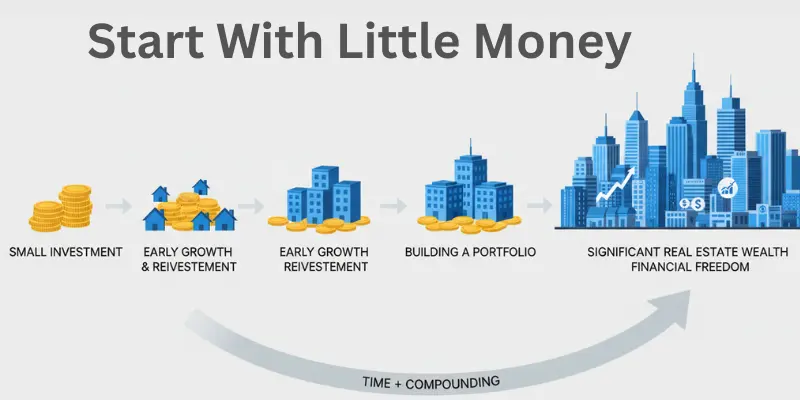
How to Start Investing With Little Money
If you are thinking about how to invest in real estate with little money passive income, the good news is that you do not need a big budget to start. Today, many platforms and tools make it possible to begin with small amounts. This is how passive real estate investing becomes easy for beginners who want to start slow and grow step by step.
Step-by-Step Guide
Starting with little money is all about taking small and smart steps. First, choose a simple investment option like REITs, crowdfunding, or fractional ownership. These options allow you to enter real estate without buying full property. Then start with a small amount so you can learn without pressure. After that, track your returns and understand how your money grows over time.
- Start with low-cost options like REITs or crowdfunding
- Invest only what you can afford to keep long-term
- Track your income and performance regularly
- Learn before increasing your investment
Example: You invest a small amount in a REIT and receive monthly dividends. This helps you understand real estate income without managing property.
Beginner Mistakes
Many beginners make simple mistakes when starting how to invest in real estate with little money passive income. One big mistake is expecting fast profits. Real estate grows slowly. Another mistake is investing without proper research, which increases risk. Some people also put all their money into one investment, which is not safe.
- Expecting quick money from real estate
- Investing without research or understanding
- Putting all money in one place
- Ignoring fees and hidden charges
Example: A beginner invests everything in one crowdfunding project without checking details and faces losses due to poor planning.
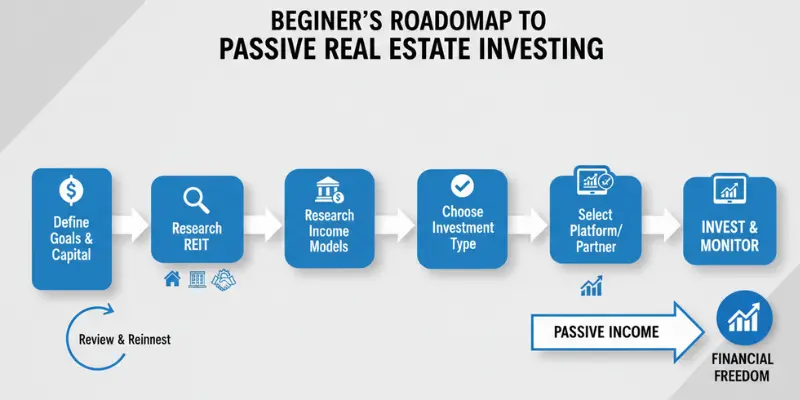
Simple Roadmap
A simple roadmap helps you stay focused and avoid confusion. Start by learning basic real estate concepts and understanding different passive options. Then pick one small investment method and begin with a low amount. After that, monitor results and slowly increase your investment as you gain confidence.
- Learn basic real estate investing first
- Start with one small investment option
- Monitor income and performance regularly
- Increase investment step by step
Example: You start with REITs, understand how dividends work, and later explore fractional ownership for higher returns.
Final Insight
Starting how to invest in real estate with little money passive income is possible if you take small steps and stay consistent. With time, passive real estate investing can grow into a stable income source, but only if you avoid mistakes and focus on long-term growth.
Common Mistakes to Avoid
Many beginners enter passive real estate investing with high hopes. They think it is simple money with no effort. But this thinking can lead to loss and stress. If you want stable results from passive real estate investing, you must avoid some common mistakes from the start.
Thinking It Is 100% Passive
One big mistake is believing real estate gives money without any work at all. Even passive methods need planning and attention.
You may still need to check performance, understand reports, or choose the right platform. If you ignore this, you may make poor decisions.
- Real estate is not fully hands-free
- You still need basic understanding
- Ignoring involvement can lead to mistakes
Example: Someone invests in REITs but never checks performance updates. Later, they miss important changes in returns.
Ignoring Risk
Another common mistake is thinking real estate is always safe. Every investment has risk, even in passive models.
Market changes, bad projects, or low demand can reduce income. If you ignore risk, you may lose money or face low returns.
- Market prices can go up and down
- Projects may underperform
- Income is not always fixed
Example: A person invests in a crowdfunding project without checking risk level and later faces delayed returns.
No Diversification
Putting all money in one place is a serious mistake. Real estate becomes safer when you spread your investment across different options.
Diversification helps reduce loss and balance income. If one investment performs poorly, others can support your earnings.
- Do not invest in one project only
- Spread money across REITs, funds, or properties
- Balance risk and return
Example: Instead of investing all money in one property deal, a person splits it between REITs and fractional ownership, which reduces risk.
Final Insight
Avoiding these mistakes is very important for successful passive real estate investing. Real estate can build steady income, but only when you understand risks, stay involved, and diversify your investments properly.
Conclusion
We started by clearing the confusion around passive real estate investing and asked a simple question: is real estate truly passive or not? Then we explored how passive models work, the difference between active and passive income, and the best beginner-friendly options like REITs, syndication, and fractional ownership. We also looked at common mistakes and a simple roadmap for starting with little money.
Faqs
Is passive real estate investing really passive?
It is passive, but not fully hands-free. You do not manage daily tasks, but you still make smart choices. You may check reports or performance sometimes. It is better called semi-passive in real life.
How can beginners start passive real estate investing?
Beginners can start with REITs, crowdfunding, or fractional ownership. These options need small money and no property handling. They are simple and beginner-friendly. You learn while you earn
Do I need a lot of money for passive real estate investing?
No, you can start with small amounts. Many platforms allow low entry budgets. You do not need to buy a full property. You can grow slowly over time.
What risks are involved in passive real estate investing?
Market changes, poor projects, and low demand can affect income. Returns are not always fixed. That is why research and diversification are important. Never invest without understanding the risk
Which option is best for passive real estate investing?
REITs are best for complete beginners. Syndication is good for higher returns with shared investment. Fractional ownership gives real property exposure. The best option depends on your comfort and budget.

3 Comments
Pingback: Medical Side Hustles: 16 Ideas, Honest Pros & Cons
Pingback: What Is Passive Loss? Rules, Limits & Examples
Pingback: Passive Income App: Best Apps That Actually Pay In 2026