

Dividend stocks are one of the most reliable ways to build passive income without selling a single share. Every quarter or month, the company deposits cash directly into your account just because you own the stock. No extra work, no customers to deal with, no chasing payments.
But not every dividend stock deserves a place in your portfolio. Some pay high yields that vanish within a year. Others pay modest yields but keep growing them for decades. Knowing the difference is what separates investors who actually build passive income from those who keep chasing the wrong numbers.
This article walks you through how dividend stocks work, what a good dividend stock actually looks like, the top categories to consider in 2026, and how to start building a dividend income portfolio that keeps paying you year after year.
Table of Contents
What Are Dividend Stocks and How Do They Work
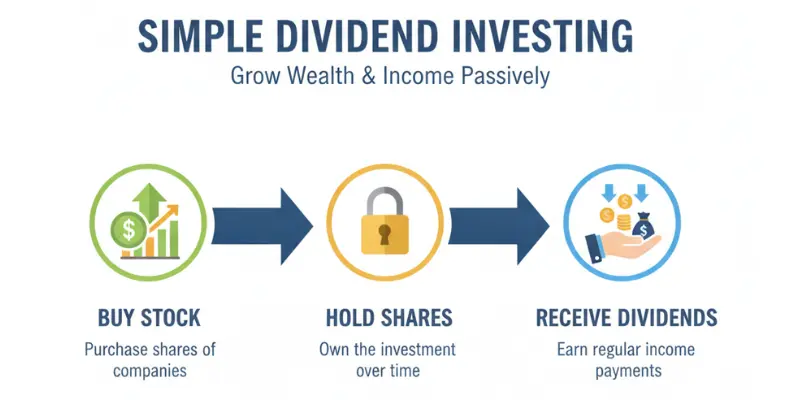
Dividend stocks are shares of companies that pay a portion of their profits to shareholders on a regular schedule. When you own shares in a dividend-paying company, you get paid simply for holding those shares, regardless of whether the stock price goes up or down.
Most dividend stocks pay quarterly, though a smaller group pays monthly. The amount you receive depends on how many shares you own and what the company’s dividend per share is at the time of payment.
Dividend investing is one of the most beginner-friendly paths into passive income because the mechanics are simple: buy shares, hold them, and collect payments. The complexity comes in choosing the right ones.
How the Dividend Yield Works
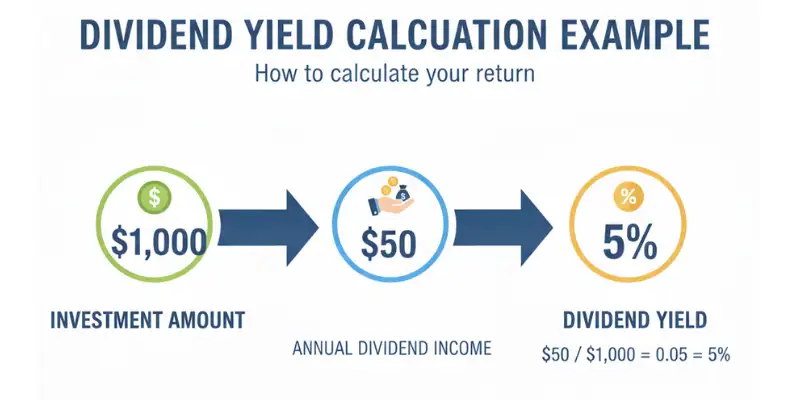
Dividend yield is the most common number people look at when comparing dividend stocks. It tells you how much annual income you get per dollar invested.
For example, if a stock trades at $50 and pays $2.50 per year in dividends, the dividend yield is 5%. That means for every $1,000 you invest, you earn $50 in dividend income per year.
Dividend yield sounds simple, but there is one thing most beginner investors miss: a very high yield can actually be a warning sign. If a stock yields 15% when similar companies yield 4%, it usually means the stock price has dropped sharply, investors doubt the dividend will last, or the company is paying out more than it earns.
The Difference Between Dividend Yield and Dividend Growth
Chasing the highest yield is a common mistake. A better approach for building passive income is to look at both yield and dividend growth together.
A stock that yields 3% today but raises its dividend by 8% every year will pay you far more 10 years from now than a stock yielding 8% today with no growth and questionable sustainability.
This is why dividend stocks for passive income should not be evaluated on yield alone.
What Makes a Good Dividend Stock for Passive Income
When building a passive income stream, consistency matters more than excitement. A dividend stock that has paid and grown its dividend through multiple recessions is worth far more than one offering a flashy yield that gets cut the moment business slows down.
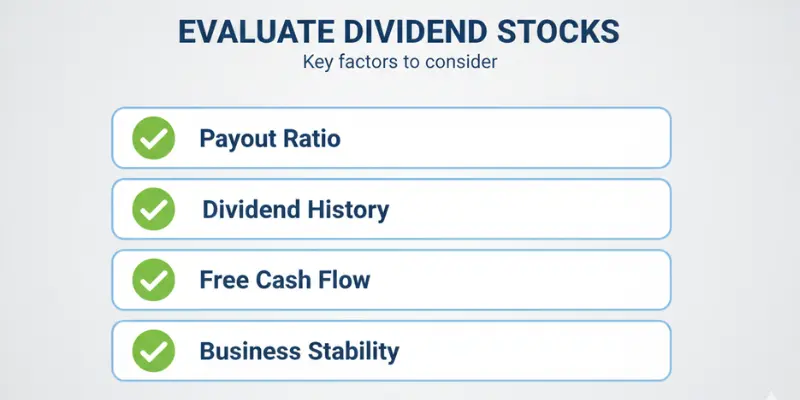
Here are the key things to check before buying any dividend stock:
Payout Ratio
The payout ratio tells you what percentage of a company’s earnings it pays out as dividends. A company earning $4 per share and paying $2 in dividends has a 50% payout ratio.
- Below 60% is generally considered safe for most industries
- 60% to 80% is acceptable for stable businesses like utilities and REITs
- Above 90% is a red flag for most companies, as there is little room to maintain the dividend if earnings drop
Dividend History
Companies that have raised their dividends every year for 10, 20, or even 50 consecutive years have proven something real. They have managed their finances well enough to keep rewarding shareholders through recessions, market crashes, and business downturns.
Dividend aristocrats are S&P 500 companies that have raised their dividends for at least 25 consecutive years. Dividend kings have done it for 50 or more years. These names are not the highest yielders, but they are the most dependable for passive income.
Free Cash Flow
Dividends are paid in cash, so a company must actually generate enough cash to cover them. Look for companies where free cash flow consistently covers dividend payments, not just earnings on paper.
If dividends are eating more cash than the company generates, a cut is usually coming.
Business Quality and Stability
The most reliable dividend stocks come from businesses where demand does not disappear during hard times. Think electricity, healthcare, grocery stores, and similar essentials.
When a company’s revenue stays stable regardless of the economic climate, it can keep paying dividends even when growth slows down.
Top Types of Dividend Stocks for Passive Income in 2026
Different types of companies have different dividend profiles. Understanding these categories helps you build a more balanced dividend income portfolio.
Blue Chip Dividend Stocks
Blue chip stocks are large, well-established companies with long operating histories. Many have paid uninterrupted dividends for decades and are known for raising them consistently.
These are not the highest-yielding stocks, but they are among the most dependable. Companies in consumer staples, healthcare, and industrials tend to dominate this category. If building reliable, growing passive income is your goal, blue chip dividend stocks form the foundation most dividend investors build on.
Real Estate Investment Trusts (REITs)
REITs are legally required to distribute at least 90% of their taxable income to shareholders as dividends. This makes them one of the highest-yielding categories in the market.
REITs invest in properties like retail centers, apartment buildings, data centers, and healthcare facilities. Because they pass through so much of their income, they often yield between 4% and 7%, well above the average S&P 500 dividend yield.
The trade-off is that REIT dividends are often taxed as ordinary income rather than at the lower qualified dividend rate. Holding REITs in a tax-advantaged account like an IRA can reduce that cost. Investors who want real estate exposure without buying physical property often split their approach between REIT dividend stocks and direct passive real estate investing, which lets them benefit from both markets.
Monthly Dividend Stocks
Most dividend stocks pay quarterly, but a group of companies pays monthly. These are popular among people who want their dividend income to align with monthly expenses.
REITs like Realty Income (ticker: O), business development companies (BDCs), and some closed-end funds tend to be the most common monthly dividend payers. Realty Income has paid a monthly dividend without a cut for over 30 years, which is why it has earned the nickname “The Monthly Dividend Company.”
Monthly dividend stocks for passive income are appealing, but the same rules apply: check the payout ratio, look at the dividend history, and make sure the underlying business can sustain the payments.
High Yield Dividend Stocks
High yield dividend stocks typically pay more than 5% annually. While the income can be attractive, these require more careful evaluation.
Business development companies (BDCs), mortgage REITs, and certain energy companies often fall in this category. Some are genuinely good businesses with strong cash flows. Others are paying out more than they earn and will eventually cut or eliminate the dividend.
If you are going to hold high yield dividend stocks, keep them as a smaller portion of your portfolio and focus your core holdings on more stable dividend growers.
Dividend Growth Stocks
Dividend growth stocks may not pay the highest yields today, but they grow their dividends steadily over time. A stock paying 2.5% today with 10% annual dividend growth will yield much more on your original investment a decade from now.
Companies like Johnson and Johnson, Procter and Gamble, and similar long-time dividend raisers are good examples of this category. They are steady, predictable, and compound income over time, which is exactly what a passive income strategy needs.
How to Build a Dividend Stock Portfolio for Passive Income
Building a dividend income portfolio does not happen overnight, but it does not need to be complicated either.
Start With a Clear Income Goal
Before picking stocks, know what you are working toward. Are you trying to generate $200 per month in passive income? $1,000? Something else?
Working backward from a target makes stock selection easier. For example, to generate $500 per month ($6,000 per year) at an average yield of 4%, you would need roughly $150,000 invested. That number gives you a savings and investment target to work toward.
If you are earlier in the process and building toward that goal, reinvesting dividends along the way dramatically speeds up the timeline.
Diversify Across Sectors
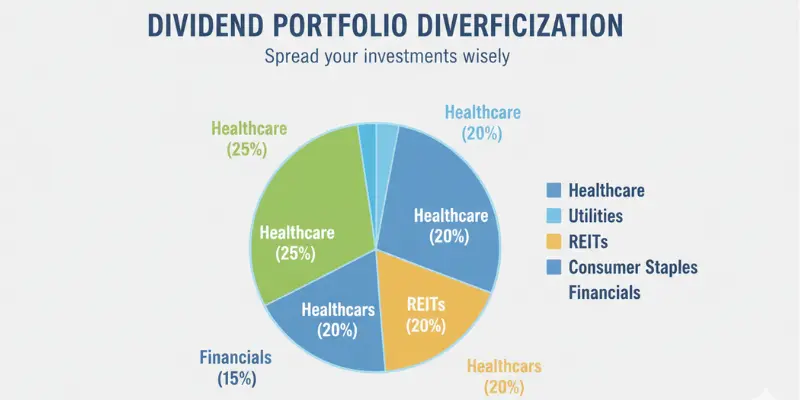
Concentrating your dividend stocks in one sector leaves you exposed if that sector runs into trouble. A portfolio that includes utilities, healthcare, consumer staples, real estate, and financials is much more resilient than one built entirely around energy stocks or telecommunications.
A broad base across multiple industries also gives you exposure to different dividend growth rates, different tax treatments, and different interest rate sensitivities.
Use Dividend Reinvestment to Accelerate Growth
Many brokerage accounts allow you to automatically reinvest dividends into additional shares through what is called a DRIP (Dividend Reinvestment Plan). When you reinvest, your dividend payment buys more shares, which generates even more dividends next time.
Over time, this compounding effect becomes significant. A $10,000 investment generating 4% in dividends, with those dividends reinvested and the dividend growing at 6% annually, can grow into a much larger income stream over a decade or two.
If you are in the accumulation phase, reinvesting dividends rather than spending them is one of the most powerful ways to build passive income over time. Many people pair this strategy with active efforts to earn more, whether through freelance writing or other work that generates cash they can funnel into their dividend portfolio.
Watch the Tax Treatment
Qualified dividends are taxed at the lower capital gains rate, which for many investors is 15%. Unqualified dividends are taxed at ordinary income rates, which can be significantly higher.
Most dividends from standard US corporations qualify for the lower rate. REIT dividends, BDC dividends, and some foreign dividends typically do not. If taxes are a concern, holding higher-taxed dividend stocks in an IRA or Roth IRA shields that income from immediate taxation.
RELATED POSTS
- Ultimate Guide to Passive Income: Best Ways to Earn Money Passively in 2026
- Active Income Made Easy: Earn Money by Working Smarter
Dividend Stocks vs. Other Passive Income Options
Dividend stocks are one of several ways to generate passive income. Understanding where they fit helps you build a more complete income strategy. There are dozens of ways to earn money with minimal ongoing effort, and dividend stocks sit among the most dependable of those options.
Many people who pursue passive income combine dividend stocks with other income streams. Someone building wealth while working a regular job might run a blogging side hustle while also steadily investing in dividend stocks, so that each income source supports the other over time.
Dividend stocks sit in an interesting middle ground among passive income options. They offer more liquidity than real estate because you can sell shares easily. They offer more reliability than rental properties because there is no vacancy risk, no tenant calls, and no repair bills.
On the other hand, they require more capital than some digital income streams and more market exposure than savings accounts or bonds. For most people building toward financial independence, dividend stocks work best as part of a diversified strategy rather than the only source of income.
Teachers, engineers, and other professionals who earn steady salaries often find it easier to funnel a fixed percentage of their income into dividend stocks each month. People running side hustles for engineers on top of their primary jobs sometimes earmark that extra income specifically for dividend investing, which speeds up portfolio building significantly.
Common Mistakes to Avoid With Dividend Stocks
Even experienced investors make these errors. Knowing them in advance helps you avoid costly mistakes.
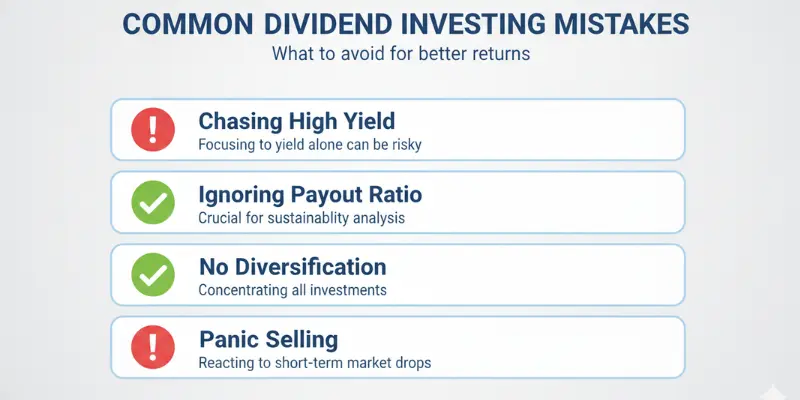
Chasing the Highest Yield
A 15% dividend yield almost always means one thing: the market does not believe it will last. If a dividend yield looks too high compared to similar companies, assume there is a problem until you can prove otherwise.
Build your core portfolio around sustainable, growing dividends rather than the highest numbers on a screener.
Ignoring the Payout Ratio
A company earning $1 per share and paying $0.95 in dividends has a 95% payout ratio. There is almost no room for the business to absorb any bad news without cutting the dividend. Always check what percentage of earnings and cash flow is going toward dividends.
Not Checking the Business Behind the Dividend
A dividend is only as strong as the business paying it. If the core business is in long-term decline, no dividend yield is worth holding on for. Make sure the company you are investing in has a reason to still be generating strong cash flow five and ten years from now.
Selling During Market Drops
Dividend investing is a long-term strategy. When markets fall, dividend stocks go down in price too. But if the underlying business is sound, the dividend keeps coming. Investors who panic-sell during downturns often lock in losses and miss the recovery.
If the dividend is still covered, a falling stock price just means you can reinvest dividends at a better price.
Is Dividend Investing Right for You
Dividend stocks for passive income work best for investors who are patient, want steady growing income over time, and do not need to beat the market with aggressive growth.
They are particularly well suited for retirement income planning, for people who want money coming in without selling shares, and for investors who value predictability over speculation.
If you are just starting out and looking for ways to generate your first streams of income, combining dividend stocks with active income from a side hustle while you build your portfolio is a practical path that many financially independent people have followed.
People across many professions use this same approach. Someone working in education might put their extra earnings from tutoring on the side directly into a dividend portfolio, letting that active work fund a passive income machine over time.
Dividend investing is not a shortcut to overnight wealth. It is a way to build a machine that pays you more over time, without requiring you to do anything but hold on and occasionally add to your positions.
Start with quality. Focus on sustainability. Let time do the compounding.
Final Thoughts on Dividend Stocks for Passive Income
Dividend stocks for passive income remain one of the most proven, straightforward ways to earn money without trading your time for it. The best dividend stocks are not the ones paying the most today. They are the ones that will still be paying, and paying more, ten or twenty years from now.
Focus on payout ratios, dividend history, and business quality above all else. Build across sectors. Reinvest during the accumulation phase. And hold through the noise.
Whether you are just beginning to build your first passive income stream or you already have investments in place, dividend stocks deserve a central place in any serious income portfolio.
The money does not stop coming just because you go to sleep. That is the point.
Frequently Asked Questions About Dividend Stocks for Passive Income
How much money do I need to start investing in dividend stocks?
There is no minimum to get started. Many brokerage platforms allow fractional share purchases, meaning you can invest as little as $1 in a dividend stock. A practical starting point is anywhere from $500 to $1,000.
How often do dividend stocks pay out?
Most dividend stocks pay quarterly, meaning four times per year. Some REITs and business development companies pay monthly, while others pay semi-annually or annually.
Are dividend stocks safe investments?
No investment is completely safe, but dividend stocks from established companies with long payment histories are generally considered more stable than many other stock investments.
What is a good dividend yield to look for in 2026?
A dividend yield between 3% and 6% from a financially stable company is generally considered attractive. Very high yields should be evaluated carefully.
Can dividend stocks replace a full-time income?
Yes, but it requires significant capital and time. Many investors build dividend income gradually through consistent investing and reinvesting dividends.
Do dividend stocks grow in value as well as paying income?
Many quality dividend stocks provide both income and long-term price appreciation, offering a combination of cash flow and portfolio growth.
What is the difference between a dividend stock and a growth stock?
Dividend stocks pay shareholders a portion of profits, while growth stocks reinvest profits back into the business to support expansion and future growth.

1 Comment
Pingback: What Is Passive Loss? Rules, Limits & Examples